Published by Build Hub Company Limited · Updated
One product, several names
Walk onto almost any site on Unguja and you will hear the walling unit called a brick, a cement brick, a block or a concrete block, sometimes by the same person in the same conversation. They are all referring to the pressed cement unit — a mix of cement, sand and fine aggregate, moulded and cured — that carries the vast majority of walls built in Zanzibar.
The confusion comes from elsewhere. In markets where fired clay bricks are common, brick and block are distinct products with different sizes, weights and laying methods. On the island, fired clay bricks are not a standard walling material, so when a fundi, a BOQ or a neighbour says bricks, the safe assumption is the cement block described on our concrete blocks page.
How a cement block differs from a fired clay brick
- Material — cement, sand and aggregate, cured rather than fired in a kiln
- Size — nominal 4, 6 or 8 inch thickness and a much larger face than a clay brick, so far fewer units per square metre of wall
- Hollow or solid — cement blocks are commonly hollow, which reduces weight and allows vertical reinforcement where designed
- Finish — almost always plastered or rendered; a clay brick is often left exposed
- Supply — manufactured locally to order, rather than imported or fired in a yard
What actually matters when you order
Once the terminology is out of the way, three things define the order. First, the nominal size: 4 inch for internal partitions, 6 inch for most walling, 8 inch for heavy, tall or retaining sections. Second, whether the unit is hollow or solid, which the engineer's drawings will state where it matters. Third, the quantity — best expressed as wall area by size, which we convert to a block count and a delivery schedule.
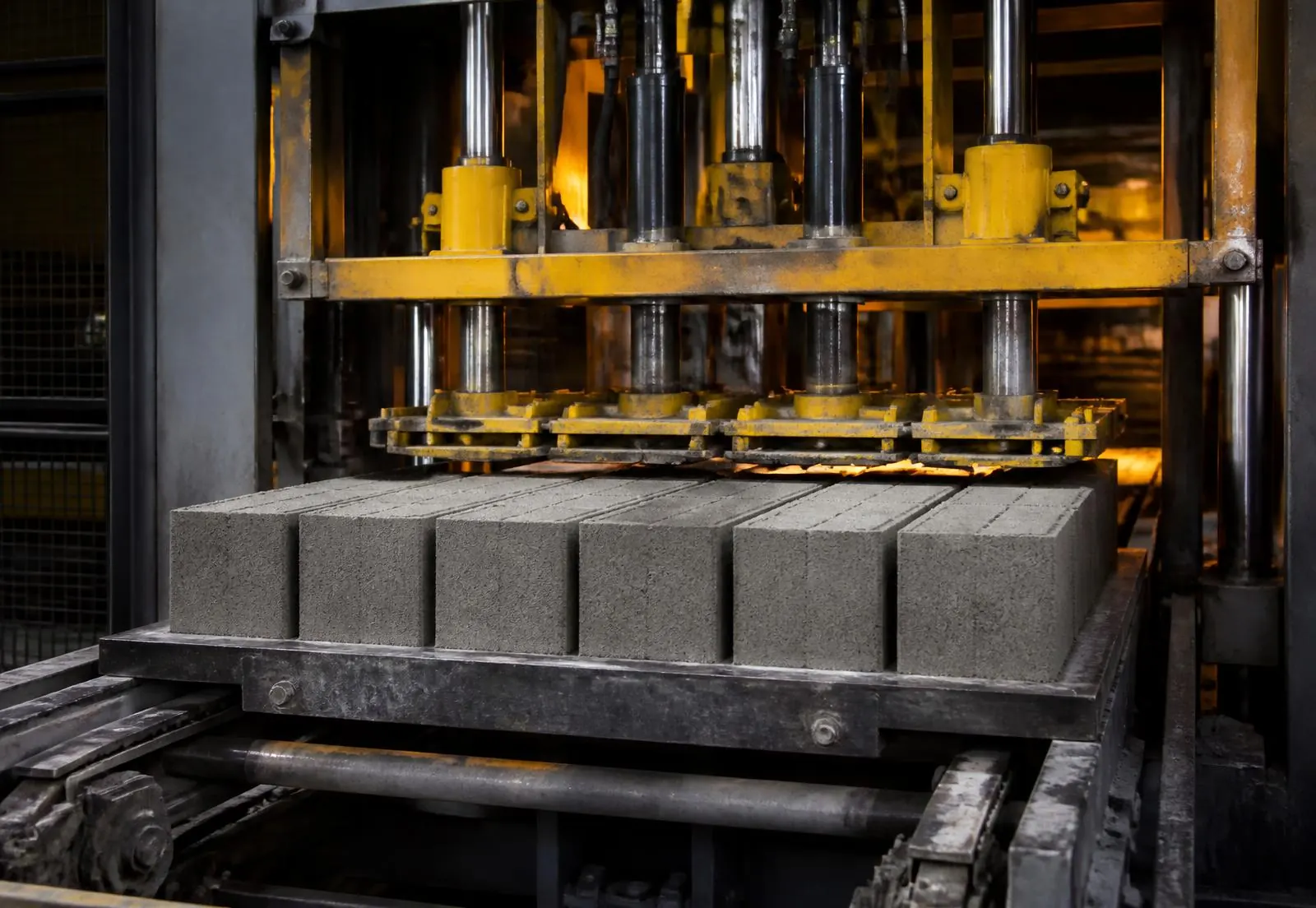
If a quotation from another source says bricks and yours says blocks, compare the size, the production method and the curing rather than the word. A hand-tamped unit dried in the sun and a hydraulically pressed unit cured under cover are both called bricks in conversation; they do not behave the same in a wall.
Questions worth asking any block supplier
- How is the unit moulded — hand-tamped or hydraulically pressed?
- How long is it cured, and where — open sun or under controlled conditions?
- Is a dimensional schedule available so coursing can be set out accurately?
- Is strength data issued after testing, or quoted as a marketing figure?
- Can 4, 6 and 8 inch units be delivered on one schedule against the programme?
Ordering from Build Hub
Send the wall areas by size (or a block count if you already have one), the site location and the date the first blocks are needed. We manufacture to order in Zanzibar, cure before release and deliver across Unguja in the sequence the works need. Call them bricks or blocks — the quotation will say concrete blocks, and the product will be the same either way.